Craig and Sal Go Global
Kathmandu
December 10, 2012
Our 30 hour journey from Istanbul to Kathmandu (via London and Delhi) was not as hard as we had feared. Delhi Airport even had some nice couches where we slept away our nine-hour transit. And, most importantly, our bags made it through all of the connections to arrive with us in Kathmandu. The scene as we stepped out of the airport took us back to the very start of our trip in Santiago, with dozens of touts and scammers trying to pretend they represented a taxi company or our guesthouse. We eventually found our genuine driver and headed off into the chaos that is Kathmandu.
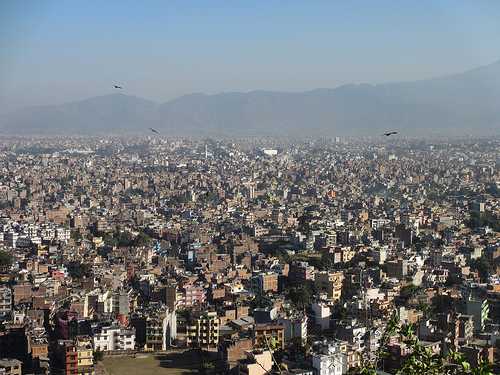
There was no doubt that we had left Europe behind. Traffic lanes don’t seem to exist in Nepal – the cars, motorbikes, trucks and cows weave around each other whenever they see a gap. The indicator is neglected in favour of the horn, used to announce an overtaking manoeuvre. Some trucks even have “Horn Please” written on their rear bumper. The roads are broken and dusty – many of the locals wear face masks to try to protect them from the dust and traffic fumes. So much of life in Kathmandu happens on the street. Amongst the dust and noise we even spotted a man getting a shave from a barber on the side of the road! Shopkeepers sit out on the street awaiting customers and there are hundreds of tiny single-room shops lining the streets selling everything from second-hand radios to motorbike parts.
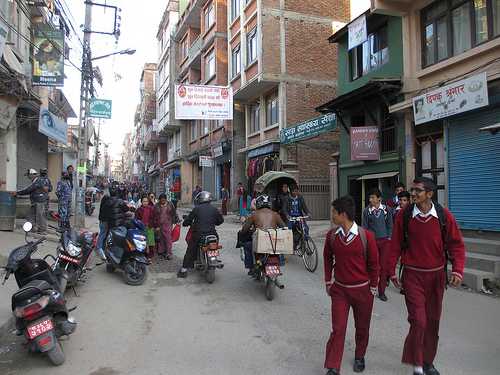 With only two days in Kathmandu, we decided to stay in the touristy area of Thamel. There was no mistaking when we had arrived in the neighbourhood – the dusty pocket-sized shops gave way to much tidier trekking equipment stores, bars, hotels and restaurants. The narrow streets in Thamel lack footpaths and are open to all traffic. A constant stream of cars, taxis, cycle rickshaws and motorbikes fly past just inches away, making for a less than relaxing pedestrian environment!
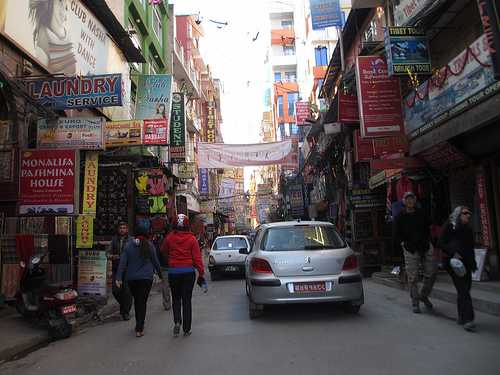
Thamel is truly a tourist ghetto. Adding to the din of car horns are the live music bars, each with a Nepali covers band playing repetitive sets of Western classics. We were next door to a loud bar with a particularly dismal vocalist – earplugs came in very handy! Knowing that our clothes wouldn’t stand up to the cold of the Himalayas, we set out to shop. Thamel is set up for just this need, with dozens of practically identical trekking shops selling counterfeit gear – “The North Fake”. We were quickly outfitted with all the gear we needed and it definitely didn’t break the bank. Some examples: walking poles were NZ$5 each and we got this warm hat for NZ$1.50.
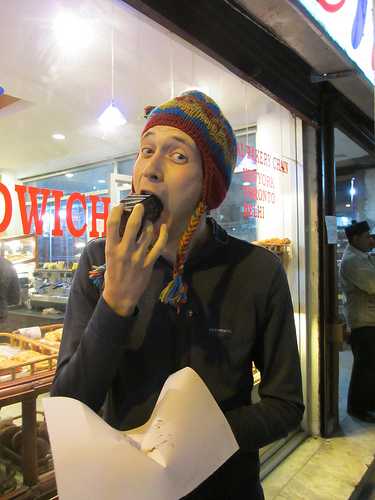 Hat + cake = NZ$2.50
Kathmandu is perhaps the only capital city in the world that suffers from power cuts of up to 16 hours per day. In order to deal with insufficient power generation, whole neighbourhoods are simply switched off for hours at a time. Thankfully, during our visit power cuts were infrequent and short. Locals have learnt to live with the power cuts – we saw shopkeepers turning on generators or connecting their shop lighting to car batteries.
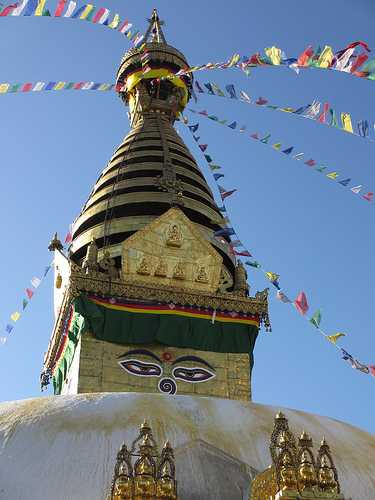
While in Kathmandu we also visited a Buddhist temple called Swayambhu Temple.
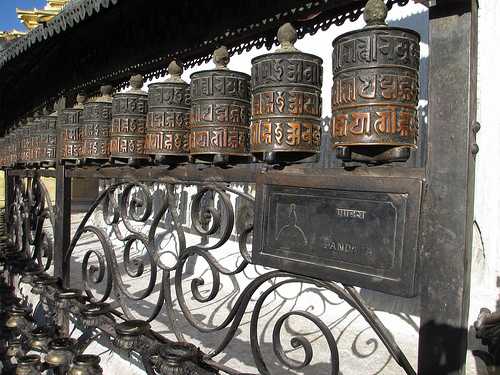
Here are a few more of our photos from Kathmandu: [slickr-flickr tag=“Kathmandu”]
We visited two of Kathmandu’s important temples – one for Hindus and one for Buddhists. Around 80% of Kathmandu’s population are Hindu and about 10% are Buddhist. Unlike in many places, religious differences are not a cause of conflict here. Pashupatinath Temple, the Hindu temple we visited, sits on the banks of the Bagmati River and is an important site for cremations. As soon as we entered we saw a cremation taking place in the open, with piles of wood burning on a concrete platform beside the river. At first we weren’t even sure if there was a body inside, but we were told that this cremation was near the end of the process (which takes about five hours).
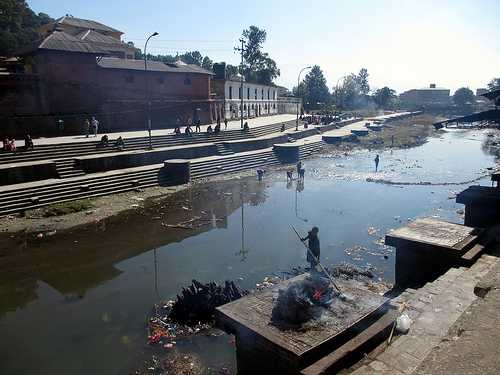
According to Hindu beliefs, cremation occurs within a few hours of a person’s death. The only people not to be cremated are babies, pregnant women and Sadhus. We were struck by how sudden it seems for the deceased person’s family and friends, going from learning of the death to cremation of the body so quickly. While the cremation process starts quickly, the funeral ceremony lasts for a long time, with the family living at the temple for around 12 days.
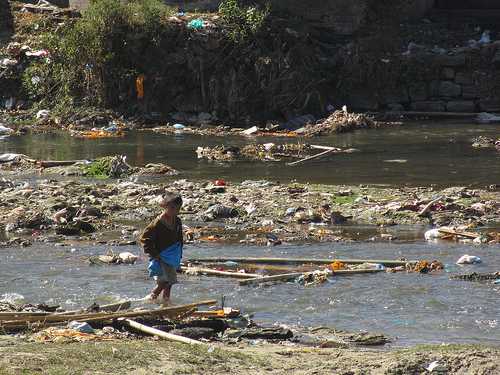
The Nepali caste system results in several separate cremation platforms – one for each of the castes. We hadn’t expected to see so much rubbish in the river, given its status as a holy site. Children comb the polluted river for gold that has been placed with the bodies and has survived the cremation process.
We are both excited (and slightly apprehensive) about spending the next six months in Asia. It’s good to be somewhere a bit more adventurous again, although that does mean losing comforts like clean rooms and reliable hot showers! Still, we feel ready for this part of our trip and will try to embrace the challenges that come our way.
Our next stop is Pokhara – a popular base for tourists heading off for treks in the Annapurna range of the Himalayas. We are setting off on a 10 day trek to Annapurna Base Camp. We’re really excited about doing the trek but slightly apprehensive at the same time, as it will be the longest walk we’ve ever done. We’ll update you shortly about how it’s gone.
Comments from WordPress
-
Garry 2012-12-10T20:06:43Z
Nice post! Ah … the memories!

Written by Craig Drayton and Sally Robertson