Craig and Sal Go Global
The ANZAC battlegrounds of Gallipoli
December 08, 2012
Of course we couldn’t leave Turkey without undertaking the Kiwi pilgrimage to the Gallipoli Peninsula. We booked a one-day tour from Istanbul that had us up in the early hours and returned us home late at night.
There’s no point us trying to recount the full history of the Gallipoli Campaign, so we’ll just mention a few things as we go along. In brief, the plan was for the ANZACs to cut across the peninsula and, together with other Allied forces from the south, secure the peninsula so that the Allied navy could sail up the Dardanelles Strait to Istanbul, force the Ottoman Empire to surrender and open up a supply route to Russia.
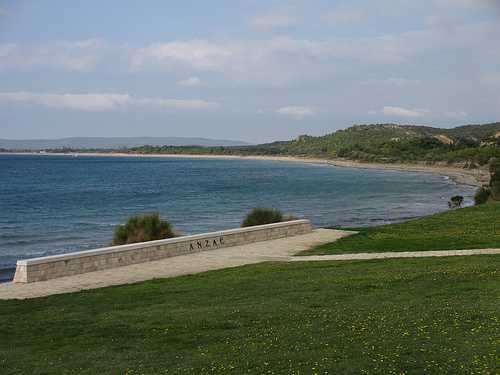
World War 1 was one of the first wars fought after the Industrial Revolution, and has been described as 19th-century warfare fought with 20th-century weapons. Old tactics came up against deadly new technology, particularly the machine gun and explosive shells, resulting in ineffectual battles of attrition with huge casualties on both sides. The Gallipoli Campaign was disastrous for the Allies. Far from quickly capturing the peninsula, they barely got off the beaches they landed on and became bogged down in nine months of trench warfare that cost hundreds of thousands of lives.
The most striking realisation for us was just how small the battleground was. The ANZAC battleground was, in its entirety, a few beaches, ridge lines and hills all within 3km of the coast. On our tour, we drove around the whole battleground in hardly any time at all. Landing at the wrong beach was a critical mistake for the ANZACs – we saw how wide and flat the intended landing site was, compared to the steep hills behind ANZAC Cove.
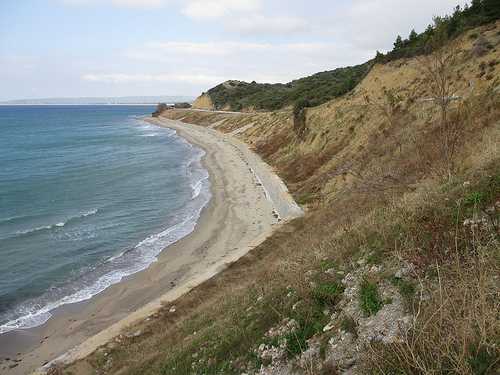
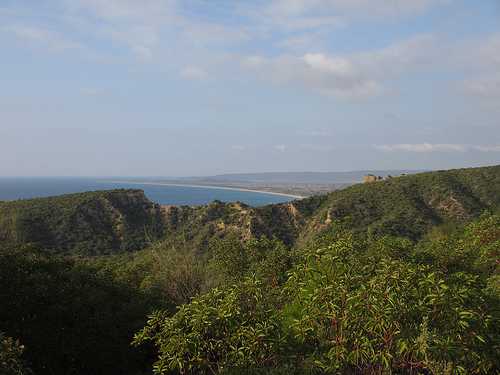 The hills above Anzac Cove
Life in the trenches was, of course, miserable. We were there in November and it was bitterly cold so it wasn’t hard to see how so many troops died from hypothermia in the depths of winter.
The Gallipoli Campaign has been described as the last “Gentlemen’s War”. In some places the trenches were just six metres apart – barely enough for a narrow two-lane road. Troops who were sick of their own food would trade rations, throwing them across no-man’s-land into the enemy trenches (although apparently the ANZACs’ canned SPAM was sometimes thrown back!) There is also a famous story of a Turk soldier who picked up a wounded ANZAC officer lying in no-man’s-land and carried him back to the Allied trenches. The soldiers are described as having had a mutual respect for one another. It’s hard to imagine on the one hand feeling camaraderie with your enemy, and on the other hand trying to kill them. We got a sense that war has changed a lot in the past hundred years.
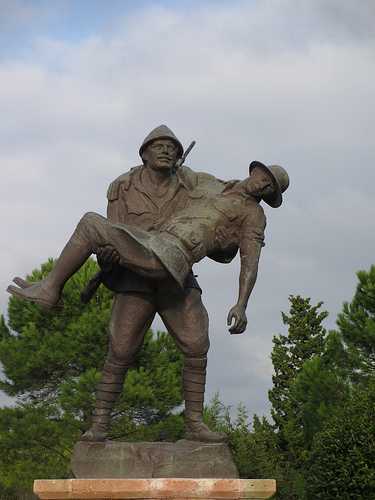 A statue commemorating the famous story
There are several memorials at Gallipoli, each located at a place of significance. The New Zealand memorial is located on Chunuk Bair, strategically important as the highest point in the area. New Zealand forces did manage to capture Chunuk Bair, although this lasted just a few days until a Turkish counter-attack pushed them back. Many Kiwis lost their lives in the Battle of Chunuk Bair – the most costly battle of the Gallipoli Campaign for New Zealanders.
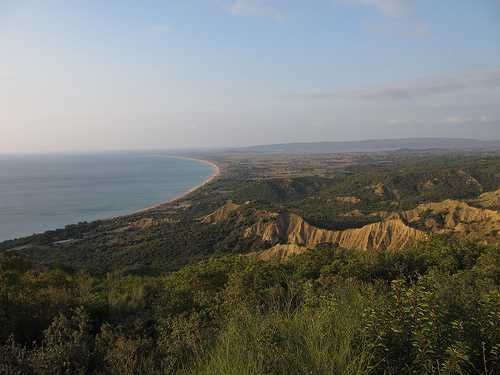 The view from Chunuk Bair
All of the memorials are simple, solemn and peaceful. Many have been placed on no-man’s-land where significant battles occurred, with the memorial lawns ending at each side’s trenches. Being able to see just how small these battlegrounds were, gave us a sense of the closeness and intensity of this kind of warfare.
Learning about Gallipoli while visiting the sites where events took place is certainly different from just reading about the campaign. Our visit to the peninsula has helped us feel much more connected with this part of New Zealand’s history.
At the end of the day we got on a bus for the long ride back to Istanbul. This will be our last post from Turkey (and from Europe) as we head east, bound for Kathmandu.

Written by Craig Drayton and Sally Robertson