Craig and Sal Go Global
Prague
November 03, 2012
We were wondering how we’d feel about visiting Prague, as we’ve been to lots of old European cities recently (and also because it has the reputation of being very touristy). However, we found Prague to be one of the most beautiful European cities we’ve visited. We had two days in Prague – one of which we spent wandering around the city, and for the other we went on a day trip to go hiking.
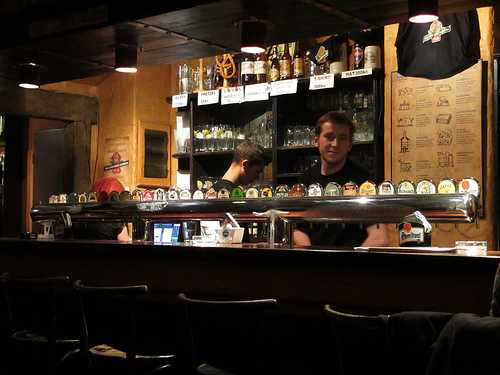
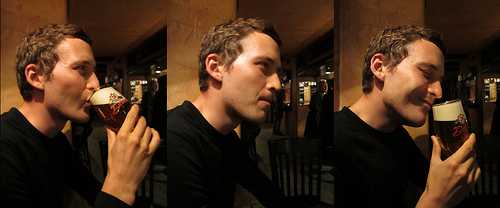
Prague was a key stop on our beer tour of Europe. With so many beers and so little time, we headed for the Prague Beer Museum and ordered a range of tastings. Our favourite was a delicious dark lager called Kout Tmavý. The tasting notes read: “Dark as sin and as tempting as all the good sins out there, topped off with a tan head. The nose is dark chocolate, warm toffee and caramel, and so the taste carries that theme on. Smooth and delicious, with just a perfect warming alcoholic glow in the finish”. Thirsty yet? Turns out it’s not just us who like it – the beer has an excellent reputation on RateBeer.com.
One thing we noticed in Prague were the strange statues all around the city. Every way you turn in Prague’s old town you find beautiful streets and buildings. There’s lots of baroque, neo-renaissance and gothic architecture, as well as two of the first ever cubist buildings.
One reason for Prague’s beauty is that it was purposefully spared from bombing by Hitler himself, who was planning on retiring here. Once Prague was in Nazi hands, Hitler spared the old Jewish Museum from destruction, intending it to become the “Museum of the Extinct Jewish Race”. The building is now a Jewish Holocaust memorial and museum - probably the only Jewish museum that can count Hitler among its curators!
After Hitler committed suicide (his museum and retirement plans never realised), Czech freedom fighters tried to liberate Prague from the Nazi occupiers. Realising they were fighting a losing battle, the Czechs called for help from American forces that were already within Czech borders. Unfortunately, the Americans were not able to help because of an agreement with the Soviet Union. This agreement gave the Soviets the right to “liberate” Europe east of a line that ran just 70km west of Prague. This agreement was to seal Czechoslovakia’s fate for the next 41 years.
On our second day in Prague, we left the city to go for a walk in the countryside. It was good to get out of the city and see a different side of the Czech Republic. The first part of our walk took us past a castle and through some small villages and farmland. We’ve come to appreciate how good track signage and maps are back home, as some of this trail was a bit hard to find.
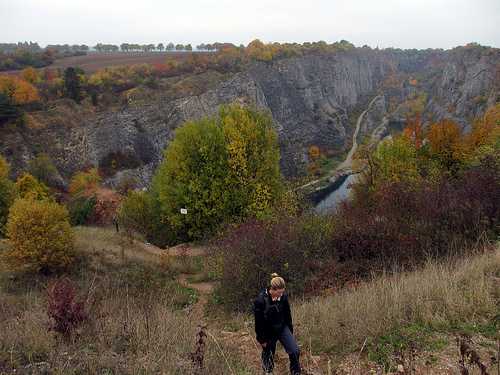
The second part of our walk took us past an unusual sight – some old Soviet limestone quarries named Malá Amerika and Velká Amerika (Little America and Big America). The larger quarry is 800 metres long, 200 metres wide and up to 100m deep! This has earned it the nickname of the “Czech Grand Canyon”. The area had a really eerie feel, with hardly any people around and lots of old rusted “Keep Out” signs. To top it off, a solitary person sat at the bottom of the quarry playing haunting music from a wooden flute! In areas it felt like the perfect film set for a nuclear disaster movie. While not exactly beautiful, it was a unique place to go walking.

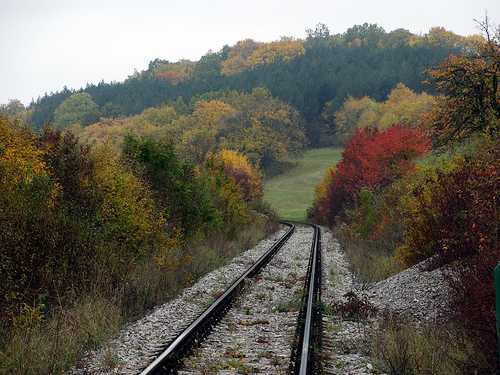
We decided that if you wanted to get the “feel” of a old European city and you could only visit a single place, Prague would be a good choice. It ticks all the boxes with beautiful buildings, small winding cobbled streets, vibrant plazas and even a castle. There’s plenty of interesting history here too, and a variety of good day trips. Of course Prague is hardly an undiscovered gem – we were glad to come in autumn, after the peak tourist season. It’s also an amazingly beautiful time of year, when all the deciduous trees are losing their red and orange leaves.
We have just one more European city to visit before we fly to Israel. Berlin is another place that every traveller seems to rave about, so we’re looking forward to checking it out.

Written by Craig Drayton and Sally Robertson